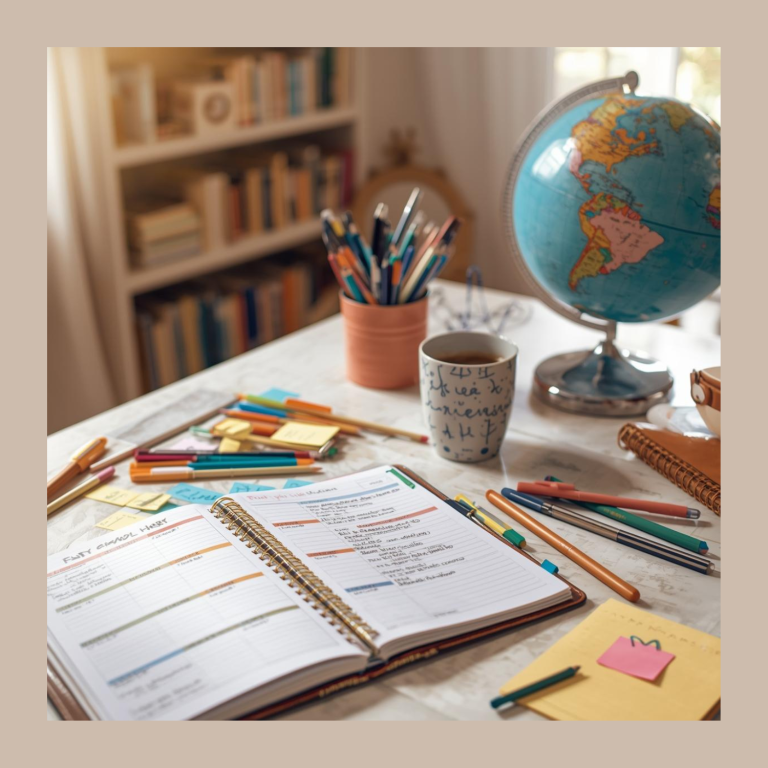
Discover the Best Homeschool Planner to Tame Your Chaos
November 26, 2025 Adrienne Brown 0 Comments
If you’ve ever found yourself searching for a math book while a pot boils over on the stove and a toddler unrolls an entire roll of toilet paper, you know the beautiful chaos of homeschooling. Juggling lesson plans, household chores, and the individual needs of each child can feel like an impossible task. For years, I believed that using a notebook was good enough. But after more than two decades and eight children, I learned the real secret: a good planner.
The right homeschool planner isn’t just a calendar; it’s a command center. It’s the tool that brings order to the chaos, turns your intentions into actions, and gives you the mental space to actually enjoy teaching your children. It’s about creating a system that serves your family, so you can spend less time feeling scattered and more time making memories.
What Makes a Homeschool Planner Actually Work?
Not all planners are created equal. A standard office agenda or a cute notebook from the store often falls short because it isn’t designed for the unique rhythm of a homeschool day. A truly effective homeschool planner understands that your life isn’t compartmentalized—it’s a blend of school, home, and family.
Here are the key features that I’ve found make a planner an indispensable tool rather than just another thing to fill out:
Customizable Scheduling Pages
Your homeschool schedule probably doesn’t look like a traditional school’s 8-to-3 day. You need a planner that reflects that flexibility. Look for layouts that allow you to plan by the week or by the day, with space for block scheduling, loop scheduling, or whatever rhythm works for your family. The ability to customize means the planner adapts to you, not the other way around.
Dedicated Lesson Planning Sections
This is the heart of a homeschool planner. You need space to map out subjects, list resources, and jot down activity ideas for each child. The best planners have sections where you can plan weekly lessons for multiple children on one spread. This gives you a bird’s-eye view of what everyone is working on, making it easier to combine subjects or identify where a child might need more support.
Goal-Setting and Progress Tracking
Homeschooling is a marathon, not a sprint. A great planner provides space to set meaningful goals for each child at the beginning of the year or semester. It should also include areas to track progress, note achievements, and record special moments or projects. Looking back on these notes is a powerful reminder of how far you’ve come, especially on challenging days.
Space for Everything Else
Life doesn’t stop when the lessons begin. An effective planner includes room for meal planning, chore charts, appointment reminders, and to-do lists. Having everything in one place prevents you from juggling multiple notebooks and sticky notes. It integrates your role as a teacher with your role as a home manager, simplifying your mental load.
How to Choose the Right Planner for You
The perfect planner for your best friend might not be the perfect planner for you. Look at your unique family size, teaching style, and organizational preferences to determine what works best.
- Consider Your Homeschooling Style: If you follow a structured method like Classical or Charlotte Mason, you might want a planner with detailed weekly layouts. If you’re an unschooler or more eclectic, a planner with more open-ended space for notes and goals might be a better fit.
- Think About Size and Portability: Do you want a large, comprehensive planner that stays on your desk, or do you need something smaller that you can toss in your bag for learning on the go?
- Digital vs. Paper: While many love the tactile satisfaction of a paper planner, others prefer the convenience of a digital one synced across devices. There’s no right answer—only what works for you. Don’t be afraid to try a printable planner first to see if you like the layout before committing to a bound version.
Making Your Planner Your Most Powerful Tool
Once you have a planner, the next step is to make it a habit. Here’s how to make it work for you.
- Set a Weekly Planning Time: Carve out 30-60 minutes every Sunday evening. Use this time to review the past week, map out the upcoming lessons, schedule appointments, and plan your meals. This simple ritual sets your entire week up for success.
- Don’t Over-Plan: Use your planner as a guide, not a rigid script. It’s okay if you don’t get to every single thing. The goal is progress, not perfection. Write your plans in pencil to give yourself the flexibility to adapt.
- Involve Your Older Kids: For tweens and teens, a planner is a fantastic tool for teaching time management and independence. Give them their own simple planner or a section in yours to track their assignments and activities.
- Review and Reflect: At the end of each month, take a few moments to look back. What worked? What didn’t? This practice helps you refine your process and celebrate your family’s accomplishments.
A good planner won’t magically do the laundry or teach fractions for you, but it can transform your homeschool. It quiets the mental clutter, empowers you to be intentional with your time, and gives you the confidence that you are on the right track. By taking a few moments to organize your thoughts on paper, you free yourself up to be the best present, patient, and joyful homeschool mom you want to be.
[Check out this post to create your best homeschool schedule]