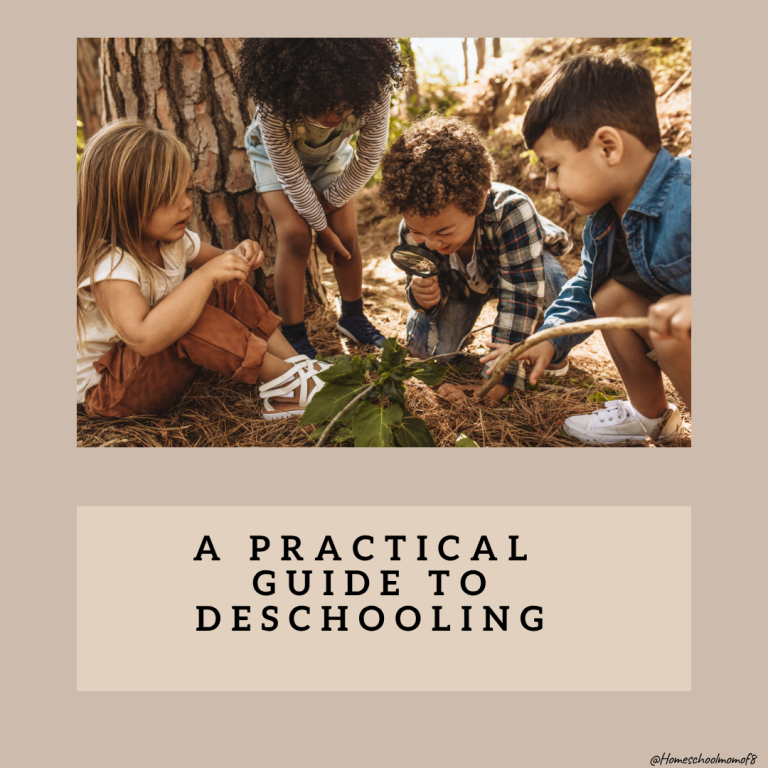
A Practical Guide to Deschooling: Your First 30 Days of Homeschooling
November 18, 2025 Adrienne Brown 0 Comments
You’ve made the decision. You’ve filed the paperwork, said goodbye to the school system, and brought your child home to learn. Now what? The temptation is to immediately open a workbook and try to replicate the school day at your kitchen table. I’m going to ask you to do the exact opposite. I want you to take a breath, put the books away, and simply rest.
This vital transition period is called “deschooling,” and it’s the most important first step you can take on your homeschool journey. It’s a time to decompress, disconnect from the bells and schedules of traditional school, and rediscover your child’s natural curiosity. For many new homeschooling parents, this feels counterintuitive, but I promise you, it is a necessary and beautiful part of the process.
What is Deschooling?
Deschooling is not the same as unschooling. It is a temporary, intentional period of adjustment after leaving a formal school environment. Think of it as a detox from the institutional mindset of learning. For years, your child has been taught that learning happens between 8 a.m. and 3 p.m., is dictated by a teacher, and is measured by tests. Deschooling is the process of unlearning those rules and remembering that learning is a natural, joyful part of life that can happen anywhere, at any time.
It’s just as much for you as it is for your child. It gives you time to observe your child without the pressure of grades and assignments. You’ll start to see what truly sparks their interest, how they learn best, and what their natural rhythms are.
Why Deschooling Matters
Skipping this step is one of the biggest causes of burnout for new homeschooling families. When you try to jump straight into a rigorous schedule, you often meet resistance and frustration from a child who isn’t ready for it.
Deschooling matters because it:
- Reduces Burnout: It prevents the power struggles that come from trying to force “school at home.”
- Builds Connection: It prioritizes your relationship over academics, rebuilding family bonds without the stress of homework and school schedules.
- Reveals Natural Interests: It gives you a roadmap for choosing curriculum and activities that will actually engage your child.
- Resets the Definition of Learning: It helps both you and your child see that learning is more than just worksheets; it’s exploring, creating, and asking questions.
Your First 30 Days: A Step-by-Step Plan
So, what does deschooling actually look like? It’s not about doing nothing; it’s about doing things differently. Here is a simple framework for your first month.
Week 1: Rest and Observe
Your only goal this week is to decompress. There are no educational objectives. Sleep in. Stay in your pajamas. Don’t set alarms. Let go of the guilt that you “should” be doing something productive. Your child needs time to recover from the exhaustion of a structured school environment, and so do you.
During this week, your job is to be an observer. Watch what your child gravitates toward when no one is telling them what to do. Do they spend hours building with LEGOs? Are they engaged in drawing? Do they pull out old toys they haven’t touched in ages? Take notes. These are clues to their passions.
Week 2: Explore and Play
Now, you can start gently introducing low-pressure activities. The key is that these are invitations, not assignments. The goal is shared experience and fun. As you transition to homeschooling, start building a portfolio to track your child’s learning journey.
Here are a few ideas:
- Visit the library: Get everyone their own library card and let them fill a bag with anything that looks interesting—Skimmed by you first.
- Go on nature walks: Explore a local trail and see what you can find. Don’t worry about identifying every plant; just enjoy being outside.
- Cook or bake together: Let them help with measuring, mixing, and, of course, taste-testing.
- Play board games: Games are fantastic for practicing math skills, logic, and good sportsmanship without a single worksheet.
- Listen to audiobooks: Find a captivating story the whole family can get lost in during car rides, being in the garden or quiet afternoons.
- Watch documentaries: Let your child pick a topic on a streaming service and learn about sharks, ancient Rome, or how candy is made.
- Get creative: Pull out paint, clay, or craft supplies with no specific project in mind, and do this as you are listening to audiobooks.
- Visit a museum on a weekday: Enjoy the quiet halls of a local science or history museum without the weekend crowds.
Weeks 3-4: Introduce Gentle Structure
By now, you may notice your child starting to ask questions or show interest in learning something more specific. This is your cue to introduce a tiny bit of structure. This isn’t a full school day; it’s a “learning invitation” that lasts for a short period.
Start with a simple “Morning Time” or “Invitation to Learn.” This could be 20-30 minutes each day where you do one small, engaging activity together. Base it on the interests you observed in the first few weeks.
- If they loved the nature walk, find a book about local birds and start a bird-watching list.
- If they were fascinated by a documentary, get a few more library books on that topic.
- If they enjoyed baking, you could explore the science behind yeast or the history of bread.
This gentle routine begins to build a new rhythm of learning in your home, one that is based on curiosity rather than compliance. This is a great time to start thinking about a [homeschool schedule you’ll stick to].
Signs You’re Ready to Start Formal Lessons
Deschooling doesn’t have a fixed timeline. For some families, it’s a few weeks; for others, it can be a little longer. You’ll know you’re ready to move toward more formal lessons when you see these signs:
- The “Boredom” Fades: The initial cries of “I’m bored!” are replaced by self-directed activity.
- They Start Asking “Why?”: Your child begins asking deep, curious questions about the world again.
- They Initiate Projects: They decide to write a story, build an elaborate fort, or learn a new skill on their own.
- They Tolerate More Structure: They are open to the idea of a short lesson or a scheduled activity without resistance.
- You Feel More Confident: You’ve had time to observe and understand your child’s learning style, and you feel ready to guide them.
Common Deschooling Challenges (and How to Overcome Them)
- “I feel like we’re falling behind!” Behind whom? The beauty of homeschooling is that you get to set the pace. Your child is not falling behind; they are healing and preparing for a more effective and personalized education. Trust the process.
- “My child is on screens all day.” It’s normal for kids to gravitate toward screens as a form of decompression. Instead of banning them, try to shift the usage. Introduce educational apps, challenge them to learn a new skill via a tutorial, or set aside time for co-watching a documentary.
- “They say they’re bored all the time.” Boredom is the birthplace of creativity. Don’t feel pressured to be their entertainer. Acknowledge their feeling (“I hear that you’re feeling bored”) and then let them sit with it. This is often when the most interesting ideas emerge.
FAQs About Deschooling
1. How long should we deschool?
A general rule of thumb is one month for every year the child was in traditional school. However, this is just a guideline. The real answer is: as long as it takes you to figure out what’s best for you and your children.
2. What if my child resists even the low-pressure activities?
That’s a sign they may need more time to simply rest. Don’t force it. Respect their need for space and downtime. Yet, helping them to understand their future success is the goal.
3. Can I skip this step if I’m starting with a kindergartener?
If your child has never been in a formal school setting, you won’t need to “deschool” them, but you absolutely need to deschool yourself. You need to let go of your preconceived notions of what kindergarten “should” look like and embrace a gentle, play-based start. [Teach your child to read at home]
4. What do I tell friends and family who think we’re just taking a long vacation?
You can simply say, “We’re in a transition period to help us adjust to a new way of learning.” You don’t owe anyone a detailed explanation. This time is for your family.
Deschooling is a gift you give to your family. It lays a foundation of trust, connection, and curiosity that will support your entire homeschooling adventure. For a complete guide on how to get started after this period, check out our main guide on [How to start homeschooling].
To help you organize your thoughts and prepare for the next steps, I’ve created a simple checklist that walks you through the entire process of getting started.
[Beginner Checklist]